
Article from El Faro magazine
Author: Nyasha Warren
There are many bibliographical references on migrations from Barbados to Panama during the construction of the Canal.
Among them we can mention Melva Lowe de Goodin who in her book“Afro-descendants in the Isthmus of Panama 1501-2012”mentions that Barbadians represent a large proportion of the people from the Caribbean who migrated to the country. Therefore, it should not be surprising that there are many descendants of Barbadians in Panama.
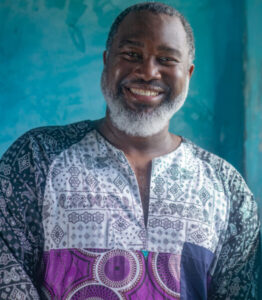
Ken Farmer, interim director of the Barbados Museum and Historical Society
In Barbados, there is also a population that feels a connection to the history of Panama, including the interim director of the Barbados Museum and Historical Societywho will visit the country next November for the Annual Conference of the Association of Caribbean Museums.At that event, Farmer will speak about risk management in the region's museums.
It is important to note that Farmer has a special connection to this topic, as he is a descendant of Barbadians who migrated to Panama several generations ago for the construction of the Canal. During that migration process, his grandfather was born in Panama, but of his four children, only one remained in Panama. His grandfather and his two sisters went to Barbados, and Farmer was only able to meet his aunt once when he was a child. Like the descendants of many other migrants of the time, Farmer experienced firsthand the consequences of family separations that occurred during that period when people from various Caribbean territories migrated to countries like Panama in search of better opportunities.
From early on in his career in History, it was apparent to Farmer that through his studies he would have the opportunity to apply history and archaeology in a practical way, and to help people learn more about themselves and how difficult times in Barbados’ history have been overcome. Through this work, Farmer emphasizes the importance of museums in the construction of national identity, something critical in the Caribbean region that is both long-standing and made up of young nations just emerging from the trauma of the colonial experience. This theme has permeated much of his research work.
Farmer began at the Barbados Museum and Historical Society as a curatorial assistant, then became a curator, and was eventually appointed interim director of the institution in 2011. For Farmer, as his involvement in the museological aspects of the institution increased, so did his awareness of the diverse stories that should be told through institutions. Therefore, it was clear to him how important it was to ensure that “multiple narratives of communities are told without censorship.”
El Barbados Museum and Historical Society as a curatorial assistant, then became a curator, and was eventually appointed interim director of the institution in 2011. For Farmer, as his involvement in the museological aspects of the institution increased, so did his awareness of the diverse stories that should be told through institutions. Therefore, it was clear to him how important it was to ensure that “multiple narratives of communities are told without censorship.”
In addition to their historical and museological concerns, Farmer also recognises that museums share many challenges. These challenges include raising funds for capacity building and for the conservation, interpretation, storage and display of collections. For many institutions in the region, it has been particularly difficult to secure financial support from governments for museums, and for Farmer it is important to learn to rethink perspectives on heritage advocacy, using a language that goes beyond historical and cultural heritage, and begins to talk about the economy and the heritage industry.
Another additional challenge identified by Farmer that primarily affects museums in the Caribbean region is the effect of climate change. The Caribbean is susceptible to risks generated by humans as well as those caused by nature, and both are equally exacerbated by climate change. For this particular problem, it is critical to find the funding to be resilient, but it is also necessary to be clear about why the collections are held and how they are managed, including their physical storage and digitization, so that the story of the region continues to be told during recovery after a disaster.
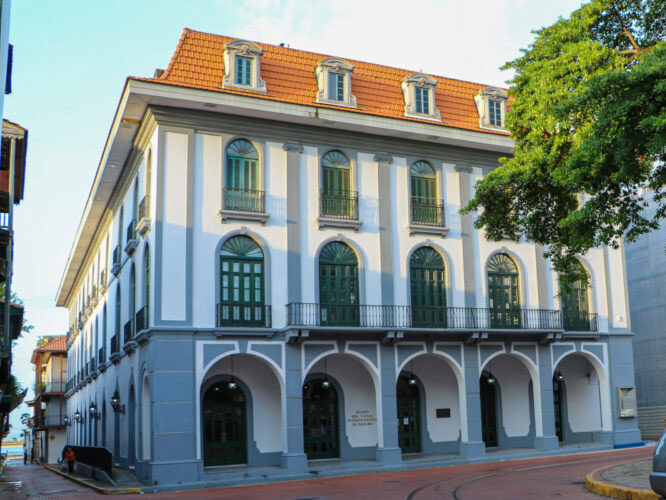
Risk mitigation in Caribbean museums will be the focus of Farmer’s presentation at the Caribbean Museum Association Annual Conference, which this year isthemed “The Future of Caribbean Museums: Communities, Co-creation and Connection.”The conference, which is hosted by the Society of Friends of the Afro-Antillean Museum of Panama and the Panama Canal Museumwill be held from November 12 to 16 in Panama City. The conference will feature speakers from the Spanish-, English- and French-speaking Caribbean who will share their knowledge and perspectives on the current state of museums in the region and their vision for the future of the sector.
The participation of the Barbados Museum and Historical Societyalong with other museums from the Caribbean and its diaspora, in the Caribbean Museum Association Annual Conference in Panama will help to emphasize the importance of the connection between Panama and the Caribbean. As many Panamanians trace their ancestry to the Caribbean islands, the visit of Caribbean museums to Panama will also symbolize for them a return to a significant part of their history. As museums in the Caribbean region connect, greater cooperation and collaboration will be achieved that could have a positive impact on their ability to share the diverse stories of the region and their ability to be resilient in the face of adversity.
If you would like more information about the Caribbean Museum Association Annual Conference, you can contact the Interoceanic Canal Museum..
The author is the Research and Documentation Manager of the Interoceanic Canal Museum of Panama.